Gear Minimalism: How Much Do You Actually Need to Start Training?
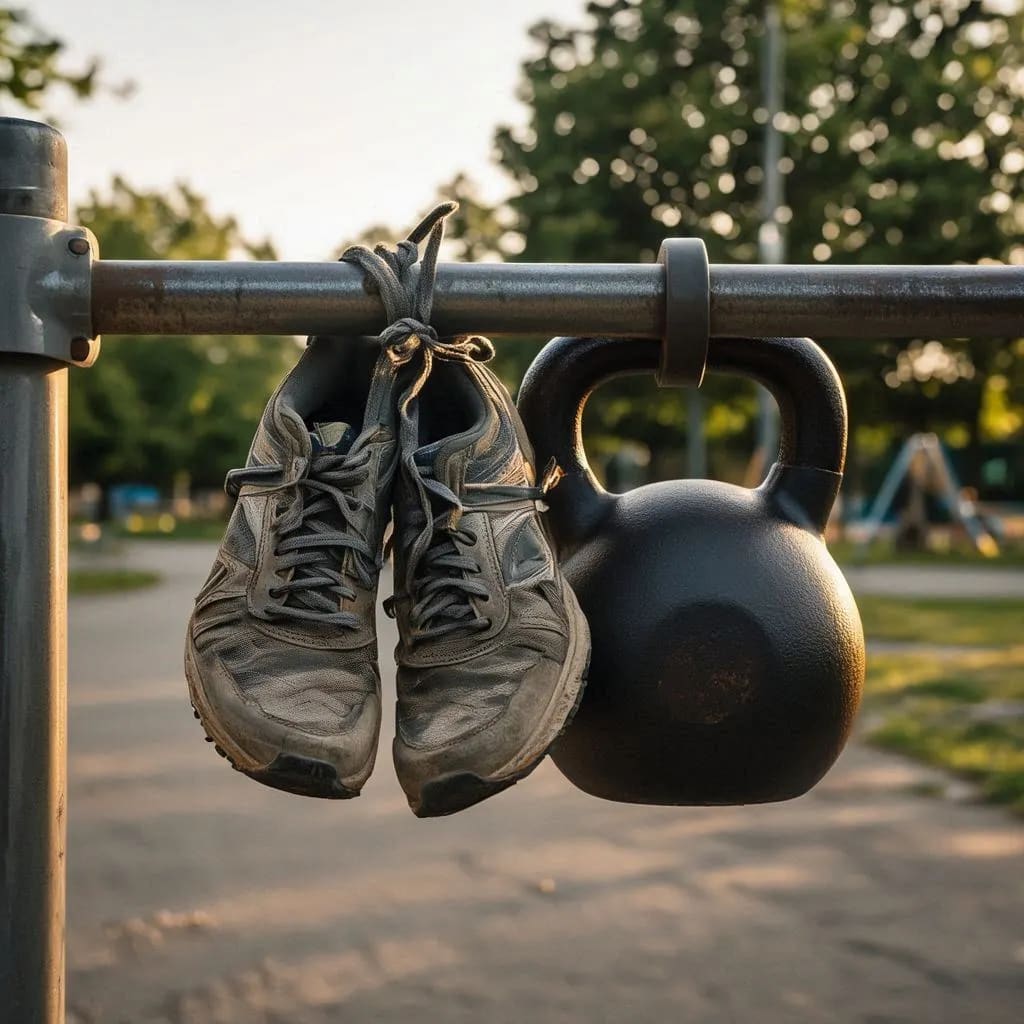
Before you ever take your first run or do your first pull-up, the fitness industry has already tried to sell you a heart rate monitor, a foam roller, compression socks, a gym bag, a pre-workout stack, and at least two pairs of shoes.
It’s overwhelming — and for a lot of people, it’s the reason they never actually start.
The truth is simpler than the marketing suggests. You don’t need much. And in most cases, the best thing you can do is begin with the minimum and add gear only when you genuinely feel the need for it.
Let’s break it down by discipline.
Quick Overview: What You Actually Need
Three disciplines, three different entry points — but the same underlying principle.
🏃 Running is the most accessible of the three. A decent pair of running shoes and comfortable clothes are genuinely all you need to start. Cost is low to medium, you can do it anywhere, and the only real dependency is your footwear.
🏋️ Gym requires access to a facility — which means either a membership or a home setup. A membership keeps the entry cost low, while a proper home gym can get expensive. Equipment dependency is high compared to the other two, but scalability is straightforward as you progress.
💪 Streetworkout sits at the opposite end of the spectrum. A pull-up bar — or just a park — is enough to get started. Cost is effectively zero, accessibility is as good as running, and progression is built entirely into the movements themselves.
Running: One Good Pair of Shoes Is Enough
Running is probably the most accessible form of training that exists. You step outside and you go. That’s it.
The one thing worth investing in early is a decent pair of running shoes — not because brands matter, but because proper footwear protects your joints and makes the whole experience more enjoyable. Everything else — GPS watches, heart rate monitors, compression gear, running belts — is optional, and you’ll know when you actually need it.
A common beginner mistake is buying everything at once before establishing the habit. Start with shoes that fit well and comfortable clothes you already own. If you’re still running three months later, then think about what’s genuinely missing.
Minimum to start: Running shoes + whatever you’re comfortable in.
Gym: You’re Paying for Access, Not Equipment
A gym membership gives you access to more equipment than you’ll ever need as a beginner. The paradox is that most beginners walk in, get overwhelmed by machines, and either do too much or gravitate toward the same two or three exercises every session.
When you’re starting out, the basics cover almost everything — a barbell, a bench, a pull-up bar, and dumbbells. That’s the core of most beginner programs. The rest of the gym floor exists for variety and specificity, which becomes relevant much later.
If a gym membership isn’t in the budget or isn’t practical, a home setup doesn’t need to be elaborate either. A set of resistance bands and a pull-up bar for the door frame is a legitimate starting point for many people.
Minimum to start: Membership + training shoes. Gloves, belts, and straps come later — when your body actually demands them.
Streetworkout: The Case for Zero Equipment
Streetworkout often gets dismissed as a “poor man’s gym” — which misses the point entirely. It’s a legitimate training discipline built around bodyweight movement, and it’s one of the most accessible ways to build real, functional strength.
All you need is a pull-up bar. Most parks have one. Many playgrounds have one. Some people start with a door frame bar at home. From there, the progression is built into the movements themselves — from basic push-ups and pull-ups to dips, muscle-ups, and more advanced calisthenics over time.
The absence of equipment isn’t a limitation — it’s the structure. Your body is the weight, and the exercises scale with your strength level naturally.
Minimum to start: A pull-up bar (or a park). Literally nothing else required.
The Bigger Point: Gear Follows Habit
Across all three disciplines, the pattern is the same. You don’t need to be fully equipped to begin — you need to begin, and the gear follows naturally as your training evolves and your needs become clearer.
Buying a full running kit before your first run, or setting up a home gym before you’ve established a consistent training habit, puts the cart before the horse. It can even create a false sense of progress — the gear makes you feel like you’re already doing the thing, when the thing hasn’t actually started yet.
Start small. Train consistently. Add equipment when something genuinely limits you — not before.
So, How Much Do You Actually Need?
Less than you think. One good pair of shoes for running. A gym membership or a doorframe bar for gym work. A park and your bodyweight for streetworkout.
The rest is details — and the details are worth exploring once you know what you’re training for and why. That’s what the rest of this blog is here for.
Whether you’re lacing up for your first run, walking into a gym for the first time, or heading to the nearest park — the best setup is the one that gets you moving today.
Found this helpful? Let us know with a thumbs up below — it means a lot and helps us know what to write more of.
Was this post helpful?
Your feedback helps us improve our content.